Supply Chain
The Paper Trail You Didn't Know You Had
Audit readiness isn't a project you build. It's what happens when your transaction data is already connected.

August 24, 2026


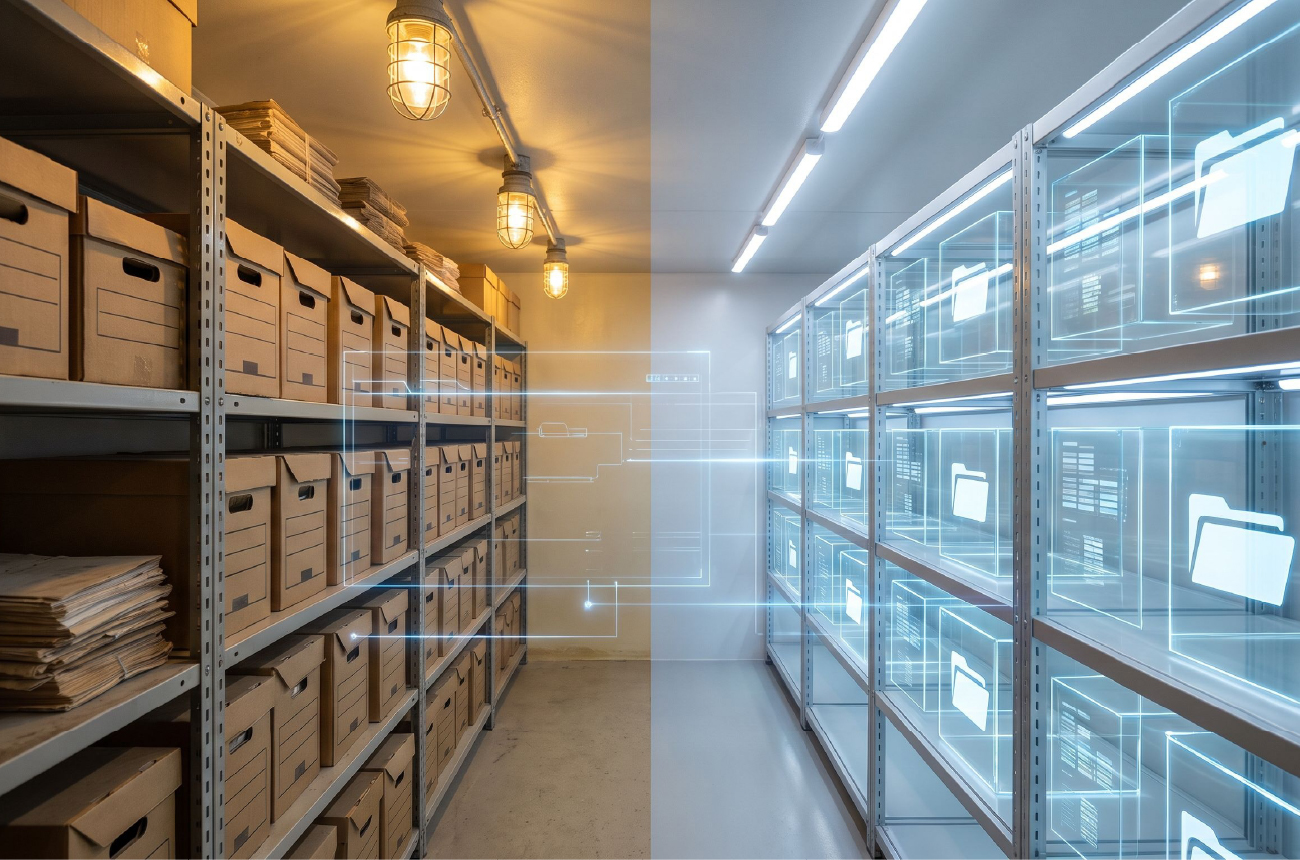
Audit readiness isn't a project you build. It's what happens when your transaction data is already connected.
Nobody thinks about their paper trail until they need one.
Then it's an auditor asking for a shipment record from eleven months ago. Or a dispute over an invoice that doesn't match what was delivered. Or a distributor trying to explain a discrepancy that started three systems and two email threads ago. Suddenly, the question isn't “did this transaction happen correctly?” It's “can anyone prove it?”
Here's the part that gets overlooked: if a purchase order, acknowledgment, shipment notice, invoice, and remittance advice move through connected systems, they're already timestamped, structured, and tied to one another. Nobody had to build a compliance process around them. The record exists because the transaction happened electronically, in a consistent format, system to system.
That's a different starting point than most audit conversations assume.
Audit readiness isn't usually something a team decides to pursue. It's a byproduct of how the data moved in the first place.
The trouble shows up when documents don't move that way. A PO lives in one inbox. The acknowledgment was a phone call nobody logged. The invoice arrived as a PDF, got manually keyed in, and picked up a typo along the way. Individually, none of that looks like a risk. It's just how the week went.
But six months later, when someone needs to reconstruct exactly what was ordered, confirmed, shipped, billed, and paid, those small gaps turn into hours of searching — or worse, a record that simply doesn't hold up.
A useful audit trail isn't just “we kept the emails.” It needs to be consistent in format, tied together across the transaction lifecycle, timestamped without manual entry, and easy to retrieve without asking three departments.
That's a high bar for spreadsheets and inboxes. It's the default behavior of structured, connected document exchange.
This is the argument for connected trading networks. The pitch usually focuses on speed — faster processing, fewer errors, quicker payments. All true.
But there's a second effect that gets less airtime: when every document in a transaction is exchanged the same structured way, the audit trail builds itself in the background. Nobody has to remember to create it. It's just what's left behind once the transaction is done.
That matters more than it sounds. When financial data holds up under scrutiny without a scramble to reconstruct it, teams spend less time defending numbers and more time trusting them.
The best paper trail isn't the one you build when someone finally asks for it. It's the one that was already there.
What is an audit trail in a procure-to-pay transaction?
It's the connected record of everything that happened — the purchase order, the acknowledgment, the shipment notice, the invoice, and the remittance advice —showing what was agreed to, delivered, billed, and paid.
Why does this matter outside of audit season?
Because the same record that satisfies an auditor also settles disputes, speeds up reconciliation, and answers questions from finance before they turn into fire drills.
What usually breaks the trail?
Manual handoffs. A PO sitting in someone's inbox, a confirmation that happened over the phone, an invoice that was hand-keyed and picked up an error along the way. None of it looks risky in the moment — it just adds up.
How does connected document exchange fix this?
It doesn't "fix" it so much as prevent the gap from forming. When documents move through the same structured, connected systems, they're timestamped and tied together automatically — no one has to remember to create the record.
Do we need a separate audit-readiness initiative?
Not if the data exchange is already structured. Audit readiness stops being a project and becomes a byproduct of how the transaction happened in the first place.
Supply Cloud (a division of LBMX) drives the commercial relationship between suppliers and their customers. Leveraging a unique one-to-many network, Supply Cloud is the leading B2B platform that allows suppliers to view their many independent customers through a single lens. Powered by LBMX technology solutions, Supply Cloud has revolutionized the trading relationship for EDI, product data exchange, payments, and rebate management.